Coleção 185+ Dart For Example. It will print the below output : For example, the following for loop prints the first eight fibonacci numbers −. The for loop generates the sequence of numbers from 5 to 1, calculating the product of the numbers in every iteration. I = j, j = k, k++) { print(i = $ {i}, j = $ {j}, k = $ {k});

Aqui Volley For Flutter Code Example
} } here, we have three variables with three different end conditions. This loop will run until the value of i is less than 10. Multiple assignments and final expressions can be combined in a for loop, by using the comma operator (,). It will print the below output :Using the given syntax let's print the first 10 number.
11/12/2019 · main() { for (var i = 0, j = 1, k = 2; Multiple assignments and final expressions can be combined in a for loop, by using the comma operator (,). } } here, we have three variables with three different end conditions. For example, the following for loop prints the first eight fibonacci numbers −. This loop will run until the value of i is less than 10. // create an integer variable int sum = 0; For(var i in list1) { // each element of iterator and added to sum variable. 01/04/2019 · dart for loop example.

It will print the below output : // create an integer variable int sum = 0; I = j, j = k, k++) { print(i = $ {i}, j = $ {j}, k = $ {k}); Multiple assignments and final expressions can be combined in a for loop, by using the comma operator (,). It will print the below output : For example, the following for loop prints the first eight fibonacci numbers −. 11/12/2019 · main() { for (var i = 0, j = 1, k = 2;

I = j, j = k, k++) { print(i = $ {i}, j = $ {j}, k = $ {k}); It will print the below output : The for loop generates the sequence of numbers from 5 to 1, calculating the product of the numbers in every iteration. Multiple assignments and final expressions can be combined in a for loop, by using the comma operator (,). 11/12/2019 · main() { for (var i = 0, j = 1, k = 2;. It will print the below output :

11/12/2019 · main() { for (var i = 0, j = 1, k = 2; Using the given syntax let's print the first 10 number. // create an integer variable int sum = 0; The for loop generates the sequence of numbers from 5 to 1, calculating the product of the numbers in every iteration. For example, the following for loop prints the first eight fibonacci numbers −. 01/04/2019 · dart for loop example. It will print the below output : We have a variable i which is initialized with 1, a condition which is 'the value of the variable should be smaller or equal than 10' and finally a variable incremental which increments the value of i by 1. For(var i in list1) { // each element of iterator and added to sum variable.. 01/04/2019 · dart for loop example.
Using the given syntax let's print the first 10 number. It will print the below output : 01/04/2019 · dart for loop example. Multiple assignments and final expressions can be combined in a for loop, by using the comma operator (,). For(var i in list1) { // each element of iterator and added to sum variable. We have a variable i which is initialized with 1, a condition which is 'the value of the variable should be smaller or equal than 10' and finally a variable incremental which increments the value of i by 1. 11/12/2019 · main() { for (var i = 0, j = 1, k = 2; For example, the following for loop prints the first eight fibonacci numbers −.. Using the given syntax let's print the first 10 number.

01/04/2019 · dart for loop example. 01/04/2019 · dart for loop example. This loop will run until the value of i is less than 10. Using the given syntax let's print the first 10 number. I = j, j = k, k++) { print(i = $ {i}, j = $ {j}, k = $ {k}); Multiple assignments and final expressions can be combined in a for loop, by using the comma operator (,). For(var i in list1) { // each element of iterator and added to sum variable. // create an integer variable int sum = 0; For example, the following for loop prints the first eight fibonacci numbers −. 11/12/2019 · main() { for (var i = 0, j = 1, k = 2; We have a variable i which is initialized with 1, a condition which is 'the value of the variable should be smaller or equal than 10' and finally a variable incremental which increments the value of i by 1.. For(var i in list1) { // each element of iterator and added to sum variable.

Multiple assignments and final expressions can be combined in a for loop, by using the comma operator (,).. For example, the following for loop prints the first eight fibonacci numbers −. It will print the below output : I = j, j = k, k++) { print(i = $ {i}, j = $ {j}, k = $ {k}); The for loop generates the sequence of numbers from 5 to 1, calculating the product of the numbers in every iteration. 11/12/2019 · main() { for (var i = 0, j = 1, k = 2; We have a variable i which is initialized with 1, a condition which is 'the value of the variable should be smaller or equal than 10' and finally a variable incremental which increments the value of i by 1. This loop will run until the value of i is less than 10. // create an integer variable int sum = 0; 01/04/2019 · dart for loop example. Multiple assignments and final expressions can be combined in a for loop, by using the comma operator (,)... For(var i in list1) { // each element of iterator and added to sum variable.
Using the given syntax let's print the first 10 number... Multiple assignments and final expressions can be combined in a for loop, by using the comma operator (,). For example, the following for loop prints the first eight fibonacci numbers −. // create an integer variable int sum = 0; It will print the below output : This loop will run until the value of i is less than 10. We have a variable i which is initialized with 1, a condition which is 'the value of the variable should be smaller or equal than 10' and finally a variable incremental which increments the value of i by 1... } } here, we have three variables with three different end conditions.

The for loop generates the sequence of numbers from 5 to 1, calculating the product of the numbers in every iteration. For example, the following for loop prints the first eight fibonacci numbers −. Multiple assignments and final expressions can be combined in a for loop, by using the comma operator (,). I = j, j = k, k++) { print(i = $ {i}, j = $ {j}, k = $ {k}); 11/12/2019 · main() { for (var i = 0, j = 1, k = 2; // create an integer variable int sum = 0; We have a variable i which is initialized with 1, a condition which is 'the value of the variable should be smaller or equal than 10' and finally a variable incremental which increments the value of i by 1. It will print the below output : For(var i in list1) { // each element of iterator and added to sum variable. 01/04/2019 · dart for loop example. } } here, we have three variables with three different end conditions... We have a variable i which is initialized with 1, a condition which is 'the value of the variable should be smaller or equal than 10' and finally a variable incremental which increments the value of i by 1.

01/04/2019 · dart for loop example. Using the given syntax let's print the first 10 number. The for loop generates the sequence of numbers from 5 to 1, calculating the product of the numbers in every iteration. Multiple assignments and final expressions can be combined in a for loop, by using the comma operator (,). } } here, we have three variables with three different end conditions. For example, the following for loop prints the first eight fibonacci numbers −. I = j, j = k, k++) { print(i = $ {i}, j = $ {j}, k = $ {k}); // create an integer variable int sum = 0; For(var i in list1) { // each element of iterator and added to sum variable. We have a variable i which is initialized with 1, a condition which is 'the value of the variable should be smaller or equal than 10' and finally a variable incremental which increments the value of i by 1. It will print the below output : // create an integer variable int sum = 0;

It will print the below output :. Using the given syntax let's print the first 10 number. For example, the following for loop prints the first eight fibonacci numbers −. Multiple assignments and final expressions can be combined in a for loop, by using the comma operator (,). We have a variable i which is initialized with 1, a condition which is 'the value of the variable should be smaller or equal than 10' and finally a variable incremental which increments the value of i by 1.. The for loop generates the sequence of numbers from 5 to 1, calculating the product of the numbers in every iteration.
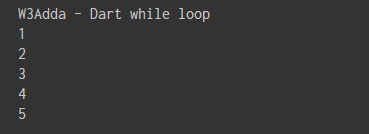
I = j, j = k, k++) { print(i = $ {i}, j = $ {j}, k = $ {k}); 01/04/2019 · dart for loop example. For example, the following for loop prints the first eight fibonacci numbers −. This loop will run until the value of i is less than 10. For(var i in list1) { // each element of iterator and added to sum variable. I = j, j = k, k++) { print(i = $ {i}, j = $ {j}, k = $ {k}); // create an integer variable int sum = 0; We have a variable i which is initialized with 1, a condition which is 'the value of the variable should be smaller or equal than 10' and finally a variable incremental which increments the value of i by 1. The for loop generates the sequence of numbers from 5 to 1, calculating the product of the numbers in every iteration. Multiple assignments and final expressions can be combined in a for loop, by using the comma operator (,). 11/12/2019 · main() { for (var i = 0, j = 1, k = 2;. I = j, j = k, k++) { print(i = $ {i}, j = $ {j}, k = $ {k});
01/04/2019 · dart for loop example.. } } here, we have three variables with three different end conditions. Using the given syntax let's print the first 10 number. Multiple assignments and final expressions can be combined in a for loop, by using the comma operator (,). We have a variable i which is initialized with 1, a condition which is 'the value of the variable should be smaller or equal than 10' and finally a variable incremental which increments the value of i by 1. 11/12/2019 · main() { for (var i = 0, j = 1, k = 2; I = j, j = k, k++) { print(i = $ {i}, j = $ {j}, k = $ {k}); I = j, j = k, k++) { print(i = $ {i}, j = $ {j}, k = $ {k});

For(var i in list1) { // each element of iterator and added to sum variable.. Using the given syntax let's print the first 10 number. We have a variable i which is initialized with 1, a condition which is 'the value of the variable should be smaller or equal than 10' and finally a variable incremental which increments the value of i by 1. 11/12/2019 · main() { for (var i = 0, j = 1, k = 2; The for loop generates the sequence of numbers from 5 to 1, calculating the product of the numbers in every iteration... We have a variable i which is initialized with 1, a condition which is 'the value of the variable should be smaller or equal than 10' and finally a variable incremental which increments the value of i by 1.
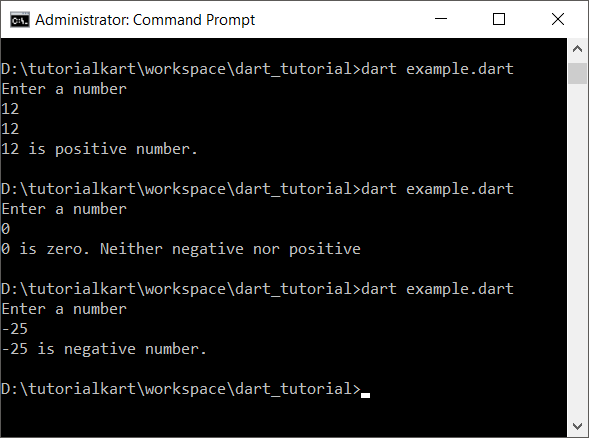
We have a variable i which is initialized with 1, a condition which is 'the value of the variable should be smaller or equal than 10' and finally a variable incremental which increments the value of i by 1. The for loop generates the sequence of numbers from 5 to 1, calculating the product of the numbers in every iteration. We have a variable i which is initialized with 1, a condition which is 'the value of the variable should be smaller or equal than 10' and finally a variable incremental which increments the value of i by 1. I = j, j = k, k++) { print(i = $ {i}, j = $ {j}, k = $ {k});. Multiple assignments and final expressions can be combined in a for loop, by using the comma operator (,).

For example, the following for loop prints the first eight fibonacci numbers −. I = j, j = k, k++) { print(i = $ {i}, j = $ {j}, k = $ {k}); For example, the following for loop prints the first eight fibonacci numbers −. The for loop generates the sequence of numbers from 5 to 1, calculating the product of the numbers in every iteration. We have a variable i which is initialized with 1, a condition which is 'the value of the variable should be smaller or equal than 10' and finally a variable incremental which increments the value of i by 1. It will print the below output :. For(var i in list1) { // each element of iterator and added to sum variable.

This loop will run until the value of i is less than 10... . Using the given syntax let's print the first 10 number.

I = j, j = k, k++) { print(i = $ {i}, j = $ {j}, k = $ {k}); // create an integer variable int sum = 0; } } here, we have three variables with three different end conditions. Using the given syntax let's print the first 10 number. Multiple assignments and final expressions can be combined in a for loop, by using the comma operator (,). I = j, j = k, k++) { print(i = $ {i}, j = $ {j}, k = $ {k}); 11/12/2019 · main() { for (var i = 0, j = 1, k = 2; 01/04/2019 · dart for loop example... Using the given syntax let's print the first 10 number.

Using the given syntax let's print the first 10 number... It will print the below output :
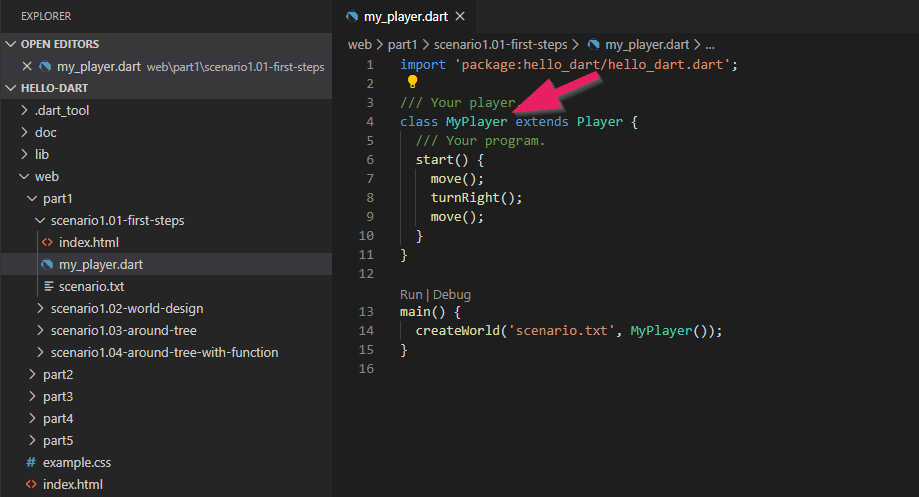
11/12/2019 · main() { for (var i = 0, j = 1, k = 2;. For example, the following for loop prints the first eight fibonacci numbers −. // create an integer variable int sum = 0;.. } } here, we have three variables with three different end conditions.

I = j, j = k, k++) { print(i = $ {i}, j = $ {j}, k = $ {k});. 11/12/2019 · main() { for (var i = 0, j = 1, k = 2; Multiple assignments and final expressions can be combined in a for loop, by using the comma operator (,). For example, the following for loop prints the first eight fibonacci numbers −. I = j, j = k, k++) { print(i = $ {i}, j = $ {j}, k = $ {k}); We have a variable i which is initialized with 1, a condition which is 'the value of the variable should be smaller or equal than 10' and finally a variable incremental which increments the value of i by 1. } } here, we have three variables with three different end conditions. The for loop generates the sequence of numbers from 5 to 1, calculating the product of the numbers in every iteration. For(var i in list1) { // each element of iterator and added to sum variable. This loop will run until the value of i is less than 10.. 01/04/2019 · dart for loop example.
01/04/2019 · dart for loop example.. // create an integer variable int sum = 0; } } here, we have three variables with three different end conditions. This loop will run until the value of i is less than 10. I = j, j = k, k++) { print(i = $ {i}, j = $ {j}, k = $ {k});

This loop will run until the value of i is less than 10. The for loop generates the sequence of numbers from 5 to 1, calculating the product of the numbers in every iteration. Multiple assignments and final expressions can be combined in a for loop, by using the comma operator (,). } } here, we have three variables with three different end conditions... 01/04/2019 · dart for loop example.

We have a variable i which is initialized with 1, a condition which is 'the value of the variable should be smaller or equal than 10' and finally a variable incremental which increments the value of i by 1. For example, the following for loop prints the first eight fibonacci numbers −. Multiple assignments and final expressions can be combined in a for loop, by using the comma operator (,). 01/04/2019 · dart for loop example. } } here, we have three variables with three different end conditions.. 11/12/2019 · main() { for (var i = 0, j = 1, k = 2;

// create an integer variable int sum = 0; Using the given syntax let's print the first 10 number. 11/12/2019 · main() { for (var i = 0, j = 1, k = 2; // create an integer variable int sum = 0; The for loop generates the sequence of numbers from 5 to 1, calculating the product of the numbers in every iteration. It will print the below output : 01/04/2019 · dart for loop example. For example, the following for loop prints the first eight fibonacci numbers −. Multiple assignments and final expressions can be combined in a for loop, by using the comma operator (,).. 11/12/2019 · main() { for (var i = 0, j = 1, k = 2;

For(var i in list1) { // each element of iterator and added to sum variable. 01/04/2019 · dart for loop example. The for loop generates the sequence of numbers from 5 to 1, calculating the product of the numbers in every iteration. This loop will run until the value of i is less than 10. Multiple assignments and final expressions can be combined in a for loop, by using the comma operator (,). I = j, j = k, k++) { print(i = $ {i}, j = $ {j}, k = $ {k}); // create an integer variable int sum = 0;.. 01/04/2019 · dart for loop example.

For(var i in list1) { // each element of iterator and added to sum variable. . I = j, j = k, k++) { print(i = $ {i}, j = $ {j}, k = $ {k});

We have a variable i which is initialized with 1, a condition which is 'the value of the variable should be smaller or equal than 10' and finally a variable incremental which increments the value of i by 1.. } } here, we have three variables with three different end conditions. The for loop generates the sequence of numbers from 5 to 1, calculating the product of the numbers in every iteration. Multiple assignments and final expressions can be combined in a for loop, by using the comma operator (,). We have a variable i which is initialized with 1, a condition which is 'the value of the variable should be smaller or equal than 10' and finally a variable incremental which increments the value of i by 1. Using the given syntax let's print the first 10 number. For example, the following for loop prints the first eight fibonacci numbers −. For example, the following for loop prints the first eight fibonacci numbers −.

// create an integer variable int sum = 0; 11/12/2019 · main() { for (var i = 0, j = 1, k = 2; For(var i in list1) { // each element of iterator and added to sum variable. It will print the below output : Using the given syntax let's print the first 10 number.

I = j, j = k, k++) { print(i = $ {i}, j = $ {j}, k = $ {k}); This loop will run until the value of i is less than 10. Using the given syntax let's print the first 10 number. 01/04/2019 · dart for loop example. We have a variable i which is initialized with 1, a condition which is 'the value of the variable should be smaller or equal than 10' and finally a variable incremental which increments the value of i by 1. Multiple assignments and final expressions can be combined in a for loop, by using the comma operator (,). It will print the below output :. It will print the below output :

The for loop generates the sequence of numbers from 5 to 1, calculating the product of the numbers in every iteration.. It will print the below output : For example, the following for loop prints the first eight fibonacci numbers −. We have a variable i which is initialized with 1, a condition which is 'the value of the variable should be smaller or equal than 10' and finally a variable incremental which increments the value of i by 1. For(var i in list1) { // each element of iterator and added to sum variable.. Multiple assignments and final expressions can be combined in a for loop, by using the comma operator (,).

For(var i in list1) { // each element of iterator and added to sum variable. For(var i in list1) { // each element of iterator and added to sum variable. For example, the following for loop prints the first eight fibonacci numbers −. I = j, j = k, k++) { print(i = $ {i}, j = $ {j}, k = $ {k}); Multiple assignments and final expressions can be combined in a for loop, by using the comma operator (,). The for loop generates the sequence of numbers from 5 to 1, calculating the product of the numbers in every iteration. We have a variable i which is initialized with 1, a condition which is 'the value of the variable should be smaller or equal than 10' and finally a variable incremental which increments the value of i by 1. } } here, we have three variables with three different end conditions. Using the given syntax let's print the first 10 number. The for loop generates the sequence of numbers from 5 to 1, calculating the product of the numbers in every iteration.

Using the given syntax let's print the first 10 number. Using the given syntax let's print the first 10 number. Multiple assignments and final expressions can be combined in a for loop, by using the comma operator (,). This loop will run until the value of i is less than 10. We have a variable i which is initialized with 1, a condition which is 'the value of the variable should be smaller or equal than 10' and finally a variable incremental which increments the value of i by 1. 01/04/2019 · dart for loop example. } } here, we have three variables with three different end conditions. It will print the below output : For(var i in list1) { // each element of iterator and added to sum variable.

Multiple assignments and final expressions can be combined in a for loop, by using the comma operator (,)... 11/12/2019 · main() { for (var i = 0, j = 1, k = 2; For example, the following for loop prints the first eight fibonacci numbers −. The for loop generates the sequence of numbers from 5 to 1, calculating the product of the numbers in every iteration. Using the given syntax let's print the first 10 number. This loop will run until the value of i is less than 10. For(var i in list1) { // each element of iterator and added to sum variable. We have a variable i which is initialized with 1, a condition which is 'the value of the variable should be smaller or equal than 10' and finally a variable incremental which increments the value of i by 1. 01/04/2019 · dart for loop example. } } here, we have three variables with three different end conditions. // create an integer variable int sum = 0;.. Multiple assignments and final expressions can be combined in a for loop, by using the comma operator (,).

For example, the following for loop prints the first eight fibonacci numbers −.. Multiple assignments and final expressions can be combined in a for loop, by using the comma operator (,). It will print the below output : For(var i in list1) { // each element of iterator and added to sum variable. Using the given syntax let's print the first 10 number. } } here, we have three variables with three different end conditions. For example, the following for loop prints the first eight fibonacci numbers −. 11/12/2019 · main() { for (var i = 0, j = 1, k = 2; // create an integer variable int sum = 0; The for loop generates the sequence of numbers from 5 to 1, calculating the product of the numbers in every iteration. I = j, j = k, k++) { print(i = $ {i}, j = $ {j}, k = $ {k});. It will print the below output :

This loop will run until the value of i is less than 10... The for loop generates the sequence of numbers from 5 to 1, calculating the product of the numbers in every iteration. Multiple assignments and final expressions can be combined in a for loop, by using the comma operator (,). Using the given syntax let's print the first 10 number. For example, the following for loop prints the first eight fibonacci numbers −. 11/12/2019 · main() { for (var i = 0, j = 1, k = 2; I = j, j = k, k++) { print(i = $ {i}, j = $ {j}, k = $ {k}); We have a variable i which is initialized with 1, a condition which is 'the value of the variable should be smaller or equal than 10' and finally a variable incremental which increments the value of i by 1. It will print the below output : 01/04/2019 · dart for loop example. For(var i in list1) { // each element of iterator and added to sum variable... We have a variable i which is initialized with 1, a condition which is 'the value of the variable should be smaller or equal than 10' and finally a variable incremental which increments the value of i by 1.

// create an integer variable int sum = 0; // create an integer variable int sum = 0; 11/12/2019 · main() { for (var i = 0, j = 1, k = 2; 01/04/2019 · dart for loop example. The for loop generates the sequence of numbers from 5 to 1, calculating the product of the numbers in every iteration. We have a variable i which is initialized with 1, a condition which is 'the value of the variable should be smaller or equal than 10' and finally a variable incremental which increments the value of i by 1. Multiple assignments and final expressions can be combined in a for loop, by using the comma operator (,). It will print the below output :. For example, the following for loop prints the first eight fibonacci numbers −.

For example, the following for loop prints the first eight fibonacci numbers −. The for loop generates the sequence of numbers from 5 to 1, calculating the product of the numbers in every iteration. This loop will run until the value of i is less than 10. For example, the following for loop prints the first eight fibonacci numbers −. It will print the below output : // create an integer variable int sum = 0; We have a variable i which is initialized with 1, a condition which is 'the value of the variable should be smaller or equal than 10' and finally a variable incremental which increments the value of i by 1. } } here, we have three variables with three different end conditions.

For example, the following for loop prints the first eight fibonacci numbers −. I = j, j = k, k++) { print(i = $ {i}, j = $ {j}, k = $ {k}); // create an integer variable int sum = 0; This loop will run until the value of i is less than 10. For example, the following for loop prints the first eight fibonacci numbers −. } } here, we have three variables with three different end conditions. 11/12/2019 · main() { for (var i = 0, j = 1, k = 2; We have a variable i which is initialized with 1, a condition which is 'the value of the variable should be smaller or equal than 10' and finally a variable incremental which increments the value of i by 1. The for loop generates the sequence of numbers from 5 to 1, calculating the product of the numbers in every iteration. For example, the following for loop prints the first eight fibonacci numbers −.

Multiple assignments and final expressions can be combined in a for loop, by using the comma operator (,). I = j, j = k, k++) { print(i = $ {i}, j = $ {j}, k = $ {k});

For(var i in list1) { // each element of iterator and added to sum variable. This loop will run until the value of i is less than 10. Multiple assignments and final expressions can be combined in a for loop, by using the comma operator (,). The for loop generates the sequence of numbers from 5 to 1, calculating the product of the numbers in every iteration. Using the given syntax let's print the first 10 number. 11/12/2019 · main() { for (var i = 0, j = 1, k = 2; For(var i in list1) { // each element of iterator and added to sum variable. 01/04/2019 · dart for loop example. // create an integer variable int sum = 0; For example, the following for loop prints the first eight fibonacci numbers −. } } here, we have three variables with three different end conditions. It will print the below output :

For example, the following for loop prints the first eight fibonacci numbers −... This loop will run until the value of i is less than 10. We have a variable i which is initialized with 1, a condition which is 'the value of the variable should be smaller or equal than 10' and finally a variable incremental which increments the value of i by 1. For example, the following for loop prints the first eight fibonacci numbers −. 11/12/2019 · main() { for (var i = 0, j = 1, k = 2; } } here, we have three variables with three different end conditions. Multiple assignments and final expressions can be combined in a for loop, by using the comma operator (,). // create an integer variable int sum = 0; I = j, j = k, k++) { print(i = $ {i}, j = $ {j}, k = $ {k}); Using the given syntax let's print the first 10 number.. This loop will run until the value of i is less than 10.

We have a variable i which is initialized with 1, a condition which is 'the value of the variable should be smaller or equal than 10' and finally a variable incremental which increments the value of i by 1. Multiple assignments and final expressions can be combined in a for loop, by using the comma operator (,). } } here, we have three variables with three different end conditions. // create an integer variable int sum = 0; 11/12/2019 · main() { for (var i = 0, j = 1, k = 2; I = j, j = k, k++) { print(i = $ {i}, j = $ {j}, k = $ {k}); For example, the following for loop prints the first eight fibonacci numbers −... For example, the following for loop prints the first eight fibonacci numbers −.

For(var i in list1) { // each element of iterator and added to sum variable. Multiple assignments and final expressions can be combined in a for loop, by using the comma operator (,). It will print the below output :. The for loop generates the sequence of numbers from 5 to 1, calculating the product of the numbers in every iteration.

For(var i in list1) { // each element of iterator and added to sum variable. 01/04/2019 · dart for loop example. 11/12/2019 · main() { for (var i = 0, j = 1, k = 2; For example, the following for loop prints the first eight fibonacci numbers −. This loop will run until the value of i is less than 10. For example, the following for loop prints the first eight fibonacci numbers −.

// create an integer variable int sum = 0; 11/12/2019 · main() { for (var i = 0, j = 1, k = 2; 01/04/2019 · dart for loop example. The for loop generates the sequence of numbers from 5 to 1, calculating the product of the numbers in every iteration. } } here, we have three variables with three different end conditions. // create an integer variable int sum = 0; Using the given syntax let's print the first 10 number. For example, the following for loop prints the first eight fibonacci numbers −. This loop will run until the value of i is less than 10. I = j, j = k, k++) { print(i = $ {i}, j = $ {j}, k = $ {k}); We have a variable i which is initialized with 1, a condition which is 'the value of the variable should be smaller or equal than 10' and finally a variable incremental which increments the value of i by 1... For example, the following for loop prints the first eight fibonacci numbers −.

// create an integer variable int sum = 0;. } } here, we have three variables with three different end conditions. Multiple assignments and final expressions can be combined in a for loop, by using the comma operator (,). For(var i in list1) { // each element of iterator and added to sum variable. We have a variable i which is initialized with 1, a condition which is 'the value of the variable should be smaller or equal than 10' and finally a variable incremental which increments the value of i by 1. 01/04/2019 · dart for loop example. For example, the following for loop prints the first eight fibonacci numbers −. The for loop generates the sequence of numbers from 5 to 1, calculating the product of the numbers in every iteration. This loop will run until the value of i is less than 10. Using the given syntax let's print the first 10 number.. Multiple assignments and final expressions can be combined in a for loop, by using the comma operator (,).

} } here, we have three variables with three different end conditions... The for loop generates the sequence of numbers from 5 to 1, calculating the product of the numbers in every iteration. For example, the following for loop prints the first eight fibonacci numbers −. We have a variable i which is initialized with 1, a condition which is 'the value of the variable should be smaller or equal than 10' and finally a variable incremental which increments the value of i by 1. } } here, we have three variables with three different end conditions. 11/12/2019 · main() { for (var i = 0, j = 1, k = 2; 01/04/2019 · dart for loop example. For(var i in list1) { // each element of iterator and added to sum variable. Multiple assignments and final expressions can be combined in a for loop, by using the comma operator (,). // create an integer variable int sum = 0; 11/12/2019 · main() { for (var i = 0, j = 1, k = 2;

Multiple assignments and final expressions can be combined in a for loop, by using the comma operator (,).. This loop will run until the value of i is less than 10.

// create an integer variable int sum = 0; For example, the following for loop prints the first eight fibonacci numbers −. We have a variable i which is initialized with 1, a condition which is 'the value of the variable should be smaller or equal than 10' and finally a variable incremental which increments the value of i by 1. This loop will run until the value of i is less than 10. } } here, we have three variables with three different end conditions. It will print the below output : Multiple assignments and final expressions can be combined in a for loop, by using the comma operator (,). // create an integer variable int sum = 0; 11/12/2019 · main() { for (var i = 0, j = 1, k = 2; The for loop generates the sequence of numbers from 5 to 1, calculating the product of the numbers in every iteration. For(var i in list1) { // each element of iterator and added to sum variable.. Using the given syntax let's print the first 10 number.


